Expanding Your E-commerce Business into the USA

The US is considered the promised land of retail and e-commerce, attracting countless online retailers and brands aiming to expand their reach. However, successfully starting an e-commerce business in the US is not a given, it requires careful planning and preparation. In this article, we cover the information and the important steps you need so that you can start off right.
The US offers a huge market and advanced digital infrastructure, making it an ideal place for online businesses. US e-commerce sales reached $340.2 billion in the second quarter of 2026 alone, 17.1% of all retail sales and 12.2% more than a year earlier. Additionally, the high purchasing power of American consumers and a culture that embraces online shopping make the US an attractive destination for any e-commerce business. We will walk you through some of the legal requirements needed to start an online business in the US, the customs and tariff rules that now apply to every shipment, how to choose the right marketplace and which online payments to offer. After that we will dive into the unique preferences of American online consumers when it comes to fulfillment, delivery, returns and customer service.
Legal requirements for selling in the US
Starting a business in the USA requires compliance with Federal, State, County, and even City laws. Even if you plan to “just operate online,” you must follow specific rules and regulations. Twenty years ago, it was much easier to start an online business; simply setting up a website or web shop would attract customers automatically. However, things have changed significantly. The government introduced more regulations, and the IRS imposed tax rules for online selling. Some key requirements to keep in mind when expanding your e-commerce business into the US are:
- Establishing a legal business entity
- US Tax implications
- Obtain an Employer Identification Number (EIN)
- Registering your brand name
- Find out if you need business insurance
- Certificates of Guarantee and Safety
- Arranging an importer of record and customs clearance for your goods
The end of de minimis: customs and tariffs in 2026
Until 2025, a parcel worth $800 or less could enter the US duty-free under the de minimis rule. Many non-US brands shipped orders straight from their home warehouse to American customers on that basis. That route is closed. The US suspended de minimis for low-value shipments from all countries in 2025, CBP made that suspension indefinite with rules that took effect on 24 June 2026, and the One Big Beautiful Bill Act repeals the exemption by law from 1 July 2027. Every shipment now needs a customs entry and pays the duties, taxes and fees that apply to it.
Tariffs have moved just as fast. In February 2026 the Supreme Court ruled that the emergency (IEEPA) tariffs were unlawful. A temporary 10% surcharge took their place, and since 24 July 2026 Section 301 tariffs apply to 60 economies. Goods from the EU pay a combined rate of at least 10% (the regular duty is topped up to 10%), goods from the UK pay an extra 10%, and goods from Switzerland and Japan a combined rate of at least 12.5%. Products already covered by Section 232 tariffs are excluded from these duties and pay the Section 232 rates instead.
The practical result: shipping single parcels from Europe to US customers has become slower and more expensive per order, while importing in bulk into a US fulfillment center spreads customs costs over many units. Rates still change often, so check the current duty for your products before you set US prices.
US Marketplaces: The right ones for your business
In the U.S., the marketplace is king. Amazon alone accounted for an estimated 35.7% of US e-commerce in 2025, in a market of about $1.2 trillion. Walmart, eBay and TikTok Shop are the next marketplaces to consider, while Shopify powers a large share of direct-to-consumer stores. To be able to make the right decision, you should:
- Create a strong marketplace strategy: It is crucial to develop a good channel strategy that maximizes customer satisfaction and reaches new buyers.
- Choose the right selling model: There are three major selling models for brands and retailers: 1st Party, 3rd Party, and a hybrid model. A hybrid approach combines elements of both 1P and 3P, allowing businesses to adapt as the market changes.
- Choose the right marketplace: Choosing the right marketplace, whether it’s a broad one or a specialized one, can significantly impact your business success by aligning with your product line and maximizing reach.
Make sure to offer the popular online payment methods
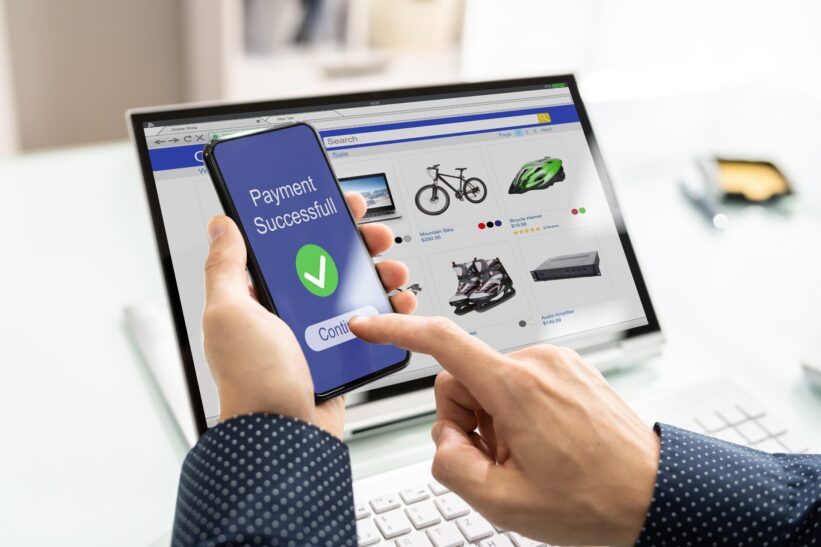
Entering the U.S. e-commerce market offers non-US brands a lucrative opportunity, but understanding the local payment landscape is crucial for success. American consumers have diverse preferences for online payment methods, and catering to these can enhance customer satisfaction and boost sales. The different payment options are:
- Digital wallets such as Apple Pay, Google Pay and PayPal
- Credit and debit cards
- Buy Now Pay Later
- Other emerging payment methods (Cryptocurrencies, direct bank transfers, Venmo, etc.)
Digital wallets are now the most used online payment method in the US, with 40% of e-commerce spend, ahead of credit cards (32%), debit cards (16%) and Buy Now Pay Later (6%), according to Worldpay’s Global Payments Report 2026. Cards remain essential, though. Major networks include Visa, MasterCard, American Express, and Discover, and they are integral to the American financial ecosystem.
Delivery Preferences of US customers
The e-commerce boom in the United States has significantly changed consumer behavior, particularly regarding delivery preferences. In a 2025 YouGov survey, 74% of US online shoppers said fast delivery is important when choosing where to shop, and 51% are willing to pay for faster delivery at least sometimes. Most shoppers still want a balance: 62% prefer reasonable cost combined with reasonable speed over the fastest option at any price.
Delivery flexibility is also crucial, with services like Buy Online Pick Up In-Store (BOPIS) and curbside pickup now part of everyday shopping.
Customer Service Preferences in the US
Customer communication preferences are moving to digital channels such as messaging and chat. This has reduced reliance on traditional phone-based customer service. Customers can now multitask while resolving issues, avoiding the frustration of waiting on hold.
Furthermore, self-service options are gaining popularity as customers increasingly prefer handling their concerns independently. This underscores the importance of adapting customer service strategies to meet modern expectations effectively.
Return preferences in the US
When it comes to returns, clear, hassle-free return policies are essential because they significantly enhance customer satisfaction and loyalty. The NRF expects 15.8% of all US retail sales to be returned in 2025, and 19.3% of online sales. Free returns are a major consideration for 82% of shoppers, and 71% are less likely to buy from a retailer again after a poor returns experience. Ensuring easy returns enhances satisfaction and loyalty in the competitive U.S. market.
Expanding to the US is definitely worth it, provided you prepare well. If you want to discuss fulfillment, returns and customer service for your US launch, contact us.
Shipping to customers in other countries?
Talk to a fulfillment expert →